
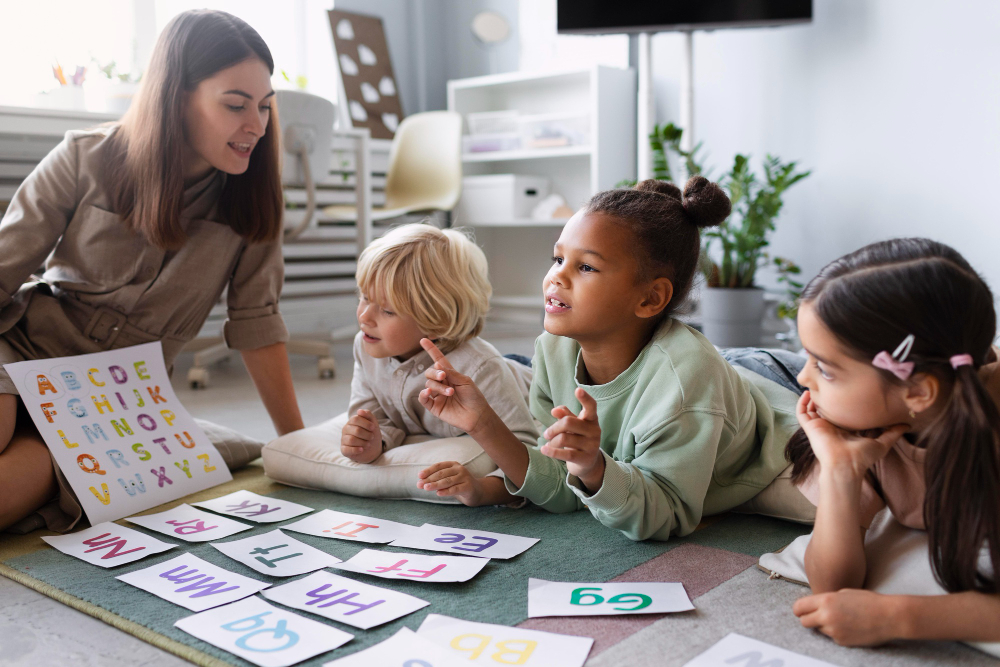
Phonics Classes: Helping Children Build Strong Reading Skills
Phonics classes are one of the most effective ways to help children learn how to read and understand English. These lessons focus on teaching the relationship between letters and sounds, allowing children to decode words and improve their reading skills step by step.
Many parents choose phonics classes because they provide a structured and proven approach to language learning. Instead of memorizing words, children understand how sounds combine to form words, which builds confidence and independence while reading.
What Are Phonics Classes?
Phonics classes teach children how letters and sounds work together to create words. By learning these sound patterns, children can read unfamiliar words without needing to memorize them.
This method builds a strong reading foundation and helps children understand the logic behind spelling and pronunciation.
Benefits of Phonics Learning for Kids
Enrolling children in phonics classes provides many important advantages for their learning development.
- Improves reading and pronunciation skills
- Builds strong spelling foundations
- Enhances vocabulary development
- Boosts confidence while reading
- Encourages independent learning
Children who learn through phonics often develop better reading fluency and comprehension compared to traditional memorization methods.
How Phonics Helps Children Read
One of the biggest advantages of phonics classes is that children learn how to connect sounds with letters. This helps them decode new words easily.
For example, children learn individual sounds such as b, a, and t. When these sounds are blended together, they form the word “bat.” This simple process helps children read many words independently.
Important Skills Children Learn
Through structured phonics lessons, children develop several important literacy skills.
- Recognizing letter sounds
- Blending sounds to read words
- Breaking words into individual sounds
- Understanding spelling patterns
- Improving reading fluency
These skills help children become confident readers and writers.
Best Age to Start Phonics Learning
Most educators recommend starting phonics classes between ages four and seven. At this stage, children are naturally curious about letters, sounds, and words.
Early learning helps children build strong reading habits that support their academic success.
How Parents Can Support Reading at Home
Parents play an important role in supporting children who attend phonics classes. Simple activities at home can strengthen what children learn during lessons.
- Read storybooks together daily
- Practice letter sounds regularly
- Encourage children to read aloud
- Use fun word and sound games
These activities help children improve their reading skills while making learning enjoyable.
Conclusion
Phonics classes provide a strong foundation for reading and language development. By learning how sounds and letters work together, children can read confidently and understand new words with ease.
With regular practice and guidance from parents and teachers, phonics learning helps children build lifelong literacy skills and develop a love for reading.